

At a Glance
- Approximately 2,500 km² of tenure in the emerging East Tennant copper-gold province
- Seven granted exploration licences and three exploration licence applications
- 100% ownership through the acquisition of Knox Resources Pty Ltd
- More than A$4.8 million of historical exploration expenditure
- More than 90 conceptual IOCG targets generated by SRK Consulting
- Three advanced gravity targets at Georgina Central: Leichhardt East, Leichhardt West and Banks
- Extensive historical geophysical coverage, including magnetic-radiometric, gravity, VTEM and Ambient Noise Tomography surveys
- Previous drilling intersected copper, uranium, silver and bismuth anomalism associated with ironstones
Exploring a New Copper-Gold Province
Alien Metals Limited holds the Georgina Basin Copper-Gold Project in Australia’s Northern Territory, a large-scale exploration position prospective for copper, gold and uranium in the emerging East Tennant mineral province.
The Project comprises approximately 2,500 km² of tenure in the emerging East Tennant copper-gold province and is positioned over prospective Proterozoic basement rocks concealed beneath Georgina Basin limestone cover.
More than A$4.8 million has previously been invested in exploration and project development, providing Alien Metals with an extensive technical dataset, multiple IOCG-style targets and several advanced prospects for systematic follow-up. For international investors less familiar with the region, the Northern Territory is a globally recognised mining jurisdiction with established mining services, supportive government geoscience programs and a long history of copper-gold production. Regional interest has recently increased following Pan African Resources’ proposed acquisition of Emmerson Resources, which values Emmerson at approximately A$311 million and consolidates exposure to copper-gold assets in the adjacent Tennant Creek district.
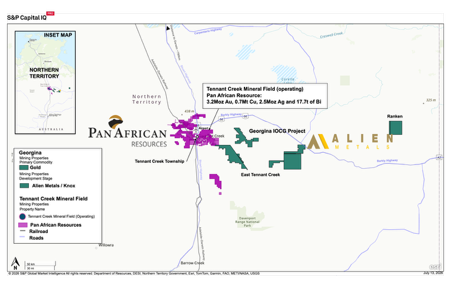
Project Overview
The Georgina Basin Project gives Alien Metals a 100% interest in a substantial exploration footprint across a frontier copper-gold belt east of the historic Tennant Creek mineral field.
The investment case is based on scale, position and prior exploration: a large landholding, a significant inherited technical database, advanced gravity targets and historical drilling that has already intersected copper, uranium, silver and bismuth anomalism associated with ironstone alteration.
Significant Historical Investment
The Georgina Basin Project benefits from approximately A$4.8 million of previous exploration investment.
This investment has established a substantial exploration database and significantly advanced Alien Metals’ understanding of the Project before the commencement of further work.
Historical work includes:
- Six exploration drillholes totalling approximately 4,048 metres
- Approximately 27,000 line kilometres of high-density airborne magnetic-radiometric surveying
- More than 2,200 gravity stations completed at regional and prospect-scale spacing
- Approximately 1,423 line kilometres of VTEM airborne electromagnetic surveying
- Two Ambient Noise Tomography surveys
- Geological and structural interpretation
- Three-dimensional gravity inversion modelling
- More than 90 conceptual IOCG targets identified by SRK Consulting
Strategic Location
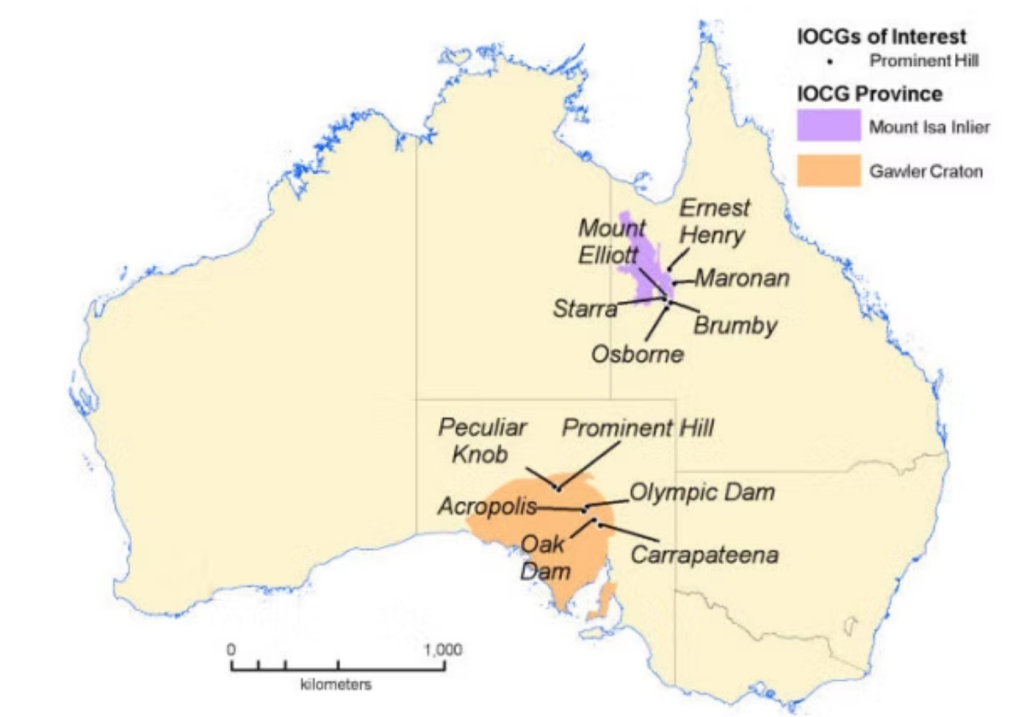
The Georgina Basin Project is located within the East Tennant region of the Northern Territory, an emerging mineral province between the established Tennant Creek and Mount Isa mining districts.
Geoscience Australia and the Northern Territory Geological Survey have undertaken extensive regional geophysical surveys, geological modelling and stratigraphic drilling across the region through the Exploring for the Future, Resourcing the Territory and National Drilling Initiative programs.
This government-supported work indicates that prospective Proterozoic basement rocks extend beneath the younger Georgina Basin cover and may form part of a broader geological corridor linking the Tennant Creek and Mount Isa mineral provinces.
The Project is strategically positioned over this prospective basement sequence in an area where available exploration tenure is increasingly tightly held.
Geological Setting
The Project is interpreted to contain Warramunga-equivalent basement rocks beneath the Georgina Basin limestone cover.
The Warramunga Formation hosts numerous high-grade copper-gold deposits within the Tennant Creek mineral field. These deposits are commonly associated with magnetite or hematite-rich ironstones and structurally controlled alteration systems.
Tennant Creek includes historically significant deposits such as Juno, which produced approximately 455,000 tonnes at an average mill-feed grade of approximately 60 g/t gold.
Across the Georgina Basin Project, numerous magnetic and gravity anomalies indicate the possible presence of dense, iron-rich rocks within the basement. These rocks may be associated with IOCG-style mineralisation.
What Are IOCG Deposits?
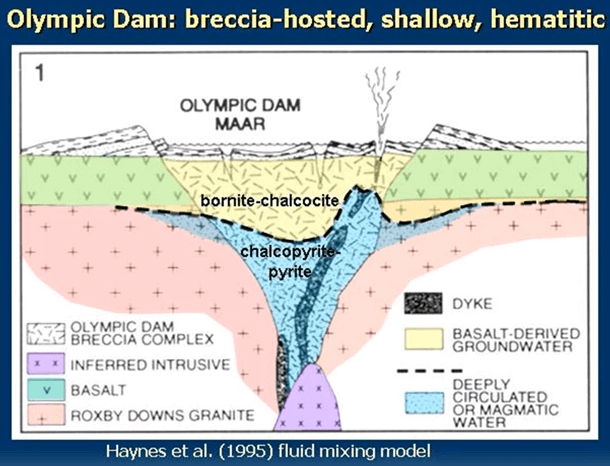
Iron oxide copper-gold, or IOCG, deposits are an important class of mineral system characterised by substantial concentrations of iron oxides, principally magnetite and hematite, associated with copper and gold mineralisation.
IOCG systems can vary considerably in size, grade and geometry. They may occur as breccia bodies, veins, replacement zones or structurally controlled mineralised systems. In addition to copper and gold, some deposits may contain economically significant quantities of silver, uranium, cobalt, bismuth and rare earth elements.
Common exploration indicators include:
- Strong gravity anomalies caused by dense, iron-rich rocks
- Magnetic highs or magnetically altered zones
- Magnetite or hematite-rich ironstones
- Large-scale fault and structural corridors
- Hydrothermal brecciation and alteration
- Copper, gold, silver, uranium and bismuth anomalism
Geophysical exploration is particularly important because IOCG deposits may be concealed beneath younger sedimentary cover. Gravity, magnetic, electromagnetic and seismic datasets can therefore help identify dense iron-rich bodies and the structures that may have focused mineralising fluids.
The Georgina Basin Project is prospective for IOCG mineralisation because it contains extensive gravity and magnetic anomalies, interpreted iron-rich basement targets, major structural features and copper, uranium, silver and bismuth anomalism identified in previous drilling.
Summary: IOCG systems are large mineral systems that can host copper and gold, commonly associated with dense iron-rich rocks. Because these rocks can be detected by gravity and magnetic surveys, explorers can identify potential targets even where the prospective basement is hidden beneath younger cover rocks. This is why the Georgina Basin Project’s gravity targets, magnetic features and previous copper-uranium pathfinder results are important.
The Project’s geological setting also has similarities to the nearby Tennant Creek mineral field, where high-grade copper-gold deposits are commonly associated with magnetite and hematite ironstones. Globally significant Australian IOCG deposits include Olympic Dam, Prominent Hill and Ernest Henry.
Regional Validation: Pan African–Emmerson Transaction
The transaction is relevant to Alien Metals because Emmerson’s copper-gold assets sit in the adjacent Tennant Creek district, demonstrating renewed institutional interest in the region’s copper-gold potential and the value of consolidated exploration positions.
Exploration Strategy
Alien Metals intends to combine the Project’s extensive historical database with modern geophysical modelling and systematic drilling.
The exploration strategy will focus on:
- Testing advanced gravity and magnetic anomalies
- Following up copper and IOCG pathfinder anomalism encountered in previous drilling
- Refining three-dimensional geological and geophysical models
- Advancing the highest-priority regional targets
- Progressing exploration licence applications
- Evaluating additional copper, gold and uranium opportunities across the broader tenure
The immediate priority is expected to be the Georgina Central area, where three advanced targets at Leichhardt East, Leichhardt West and Banks remain either unexplained or inadequately drill tested.
Target Maps and Previous Drilling Results
The website page should prominently display maps showing the Alien/Knox tenure, the adjacent Tennant Creek copper-gold district, the Pan African–Emmerson transaction area and the three priority Georgina Central targets: Leichhardt East, Leichhardt West and Banks.
- Map 1: Northern Territory location map showing Georgina Basin, Tennant Creek and Mount Isa regional context.
- Map 2: Tenement map showing Alien/Knox ground adjacent to Pan African/Emmerson assets.
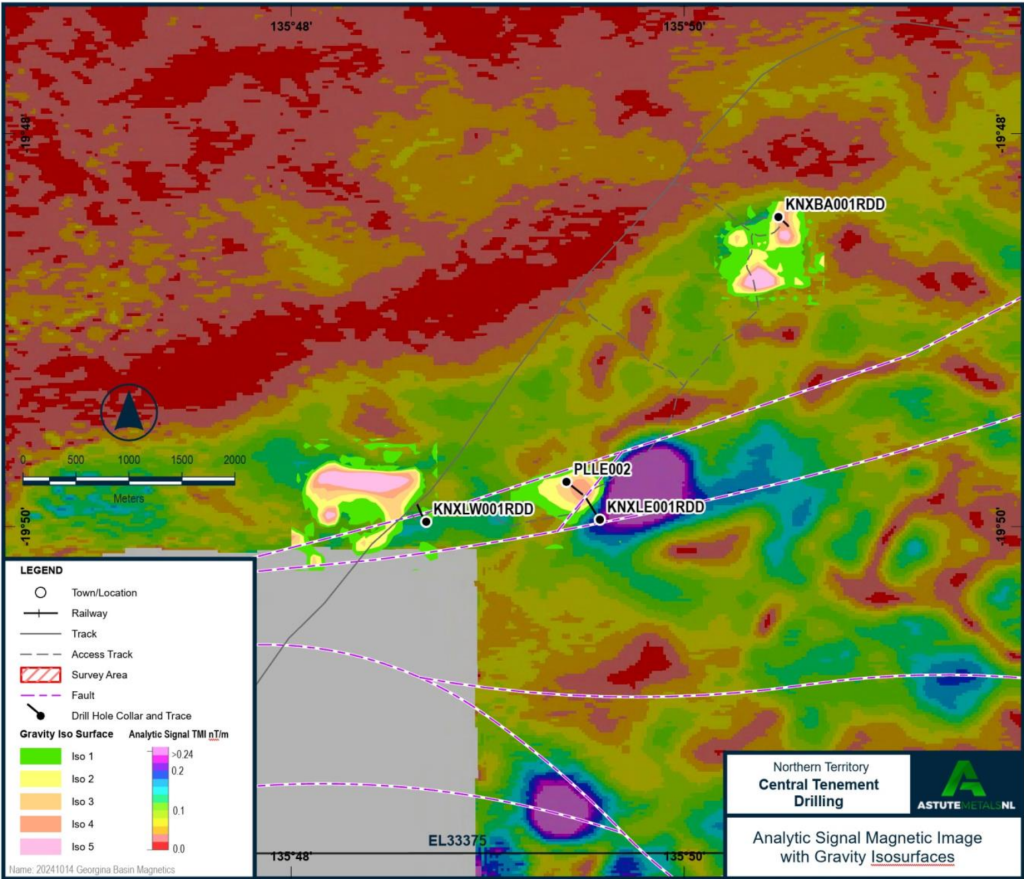
- Map 3: Georgina Central target map highlighting Leichhardt East, Leichhardt West and Banks with gravity/magnetic anomalies and drillhole locations.
Georgina Central
Georgina Central contains three priority prospects located approximately 12 kilometres south of Barkly Homestead:
- Leichhardt East
- Leichhardt West
- Banks
The prospects were refined using high-resolution gravity surveying and Ambient Noise Tomography.
Ambient Noise Tomography was used to model the depth and geometry of the Georgina Basin limestone cover. The interpreted gravitational effect of the limestone was then removed from the gravity dataset to provide a clearer representation of the underlying basement geology.
Three-dimensional inversion modelling subsequently identified discrete dense basement bodies with interpreted densities exceeding approximately 3.49 grams per cubic centimetre.
These densities are consistent with iron-rich rocks and provide advanced targets for IOCG exploration.
Leichhardt East
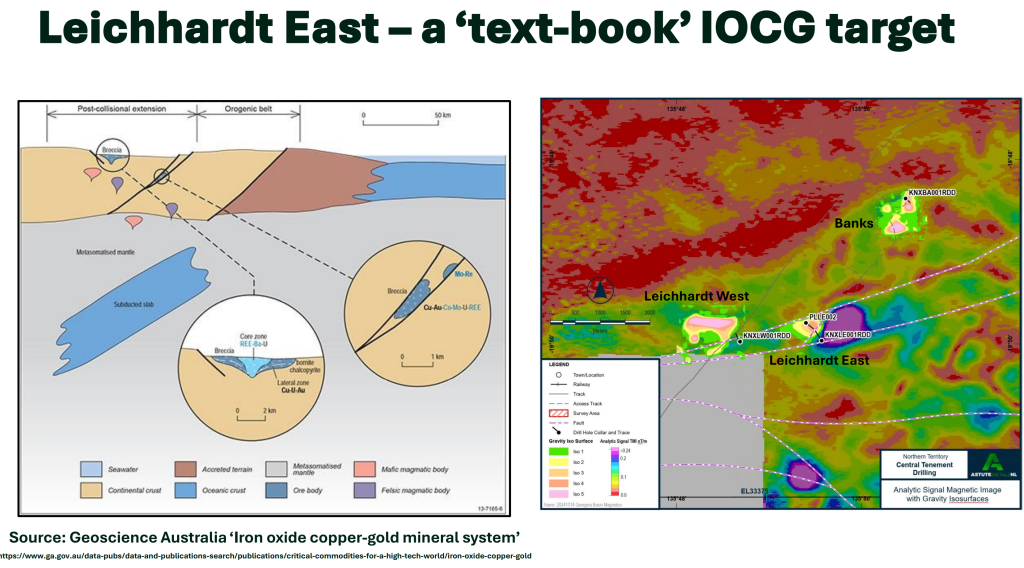
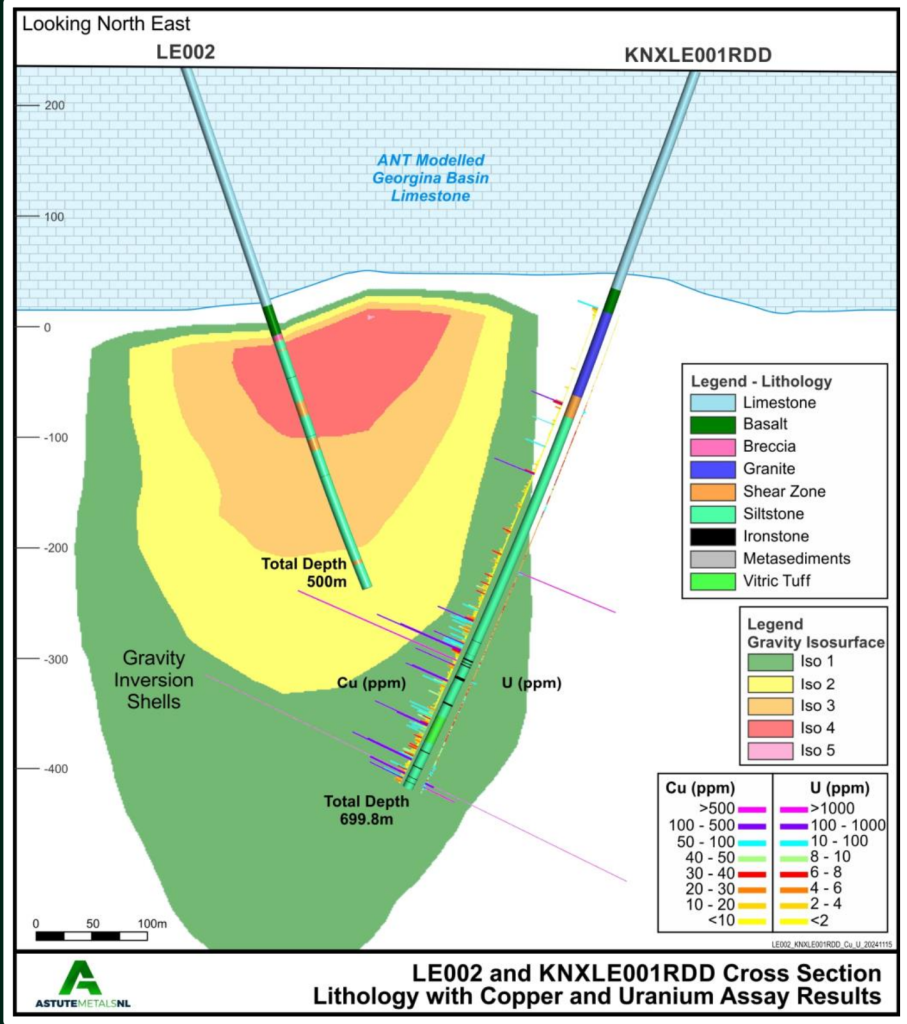
Leichhardt East is interpreted as a breccia-style IOCG target comprising dense rocks positioned within a structurally complex fault zone.
The modelled target has approximate dimensions of:
- 200 metres by 200 metres
- Approximately 100 metres vertically
- Modelled densities of approximately 3.5 to 3.7 grams per cubic centimetre
Two drillholes have been completed in the prospect area. However, the principal modelled density anomaly remains unexplained.
Drillhole KNXLE001RDD intersected mineralised ironstone intervals, including:
- 0.32 metres at 0.24% U₃O₈, 819 ppm copper and 0.15 g/t silver from 689.09 metres
- 0.75 metres at 0.11% U₃O₈, 40.8 ppm bismuth and 0.11 g/t silver from 481.10 metres
- 0.90 metres at 374 ppm U₃O₈, 11.8 ppm bismuth and 78.6 ppm copper from 693.30 metres
The intersection of mineralised ironstones and IOCG pathfinder elements supports further testing of the main gravity target.
Leichhardt West
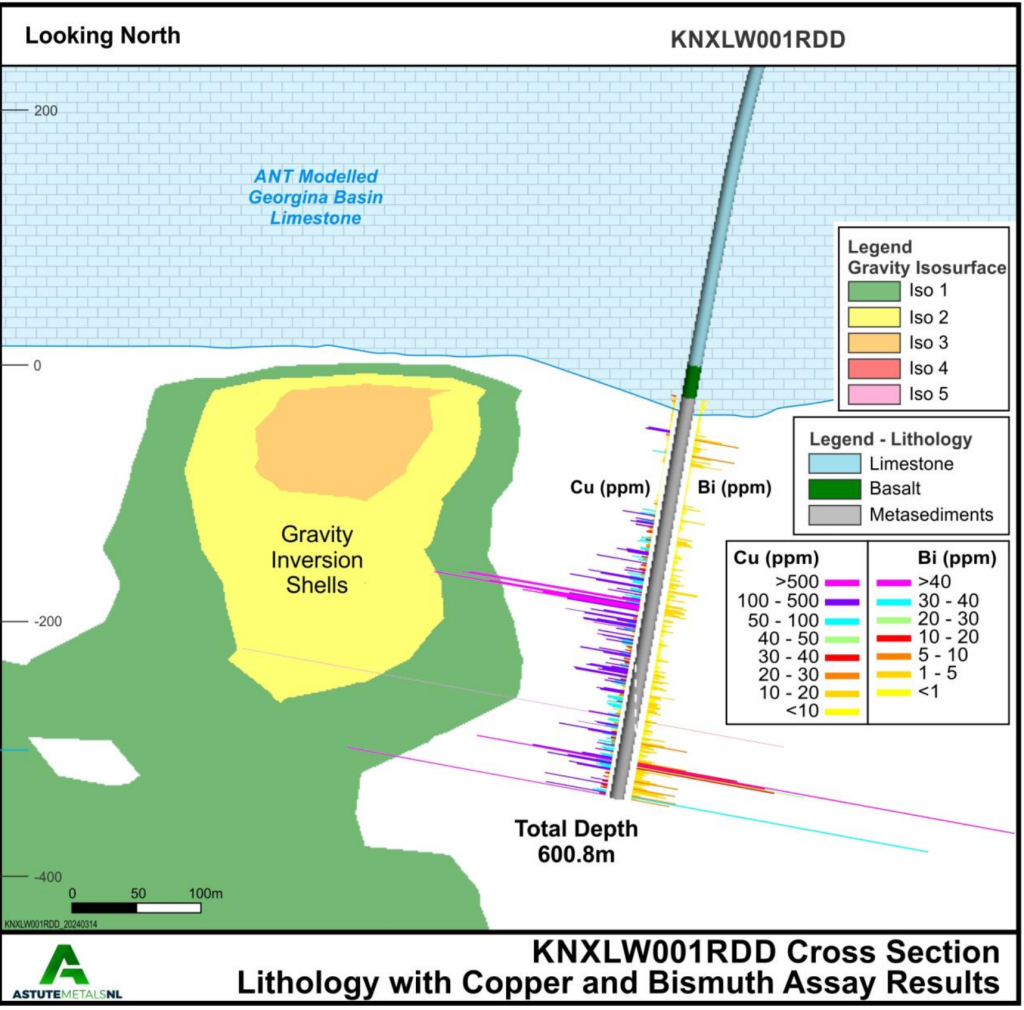
Leichhardt West contains a large, modelled dense body with approximate dimensions of:
- 800 metres long
- 150 metres wide
- Approximately 100 metres vertically
- Modelled densities of approximately 3.5 to 3.9 grams per cubic centimetre
The previous drillhole did not intersect the newly modelled dense body.
However, drilling intersected a broad zone of elevated copper adjacent to the target, including:
- 1 metre at 0.10% copper from 441 metres
- 1 metre at 0.12% copper from 445 metres
- 0.25 metres at 0.22% copper from 536.05 metres
- 1 metre at 0.15% copper from 600 metres to the end of the hole
The combination of copper anomalism, structural complexity and the adjacent unexplained gravity body makes Leichhardt West a priority for further drilling.
Banks
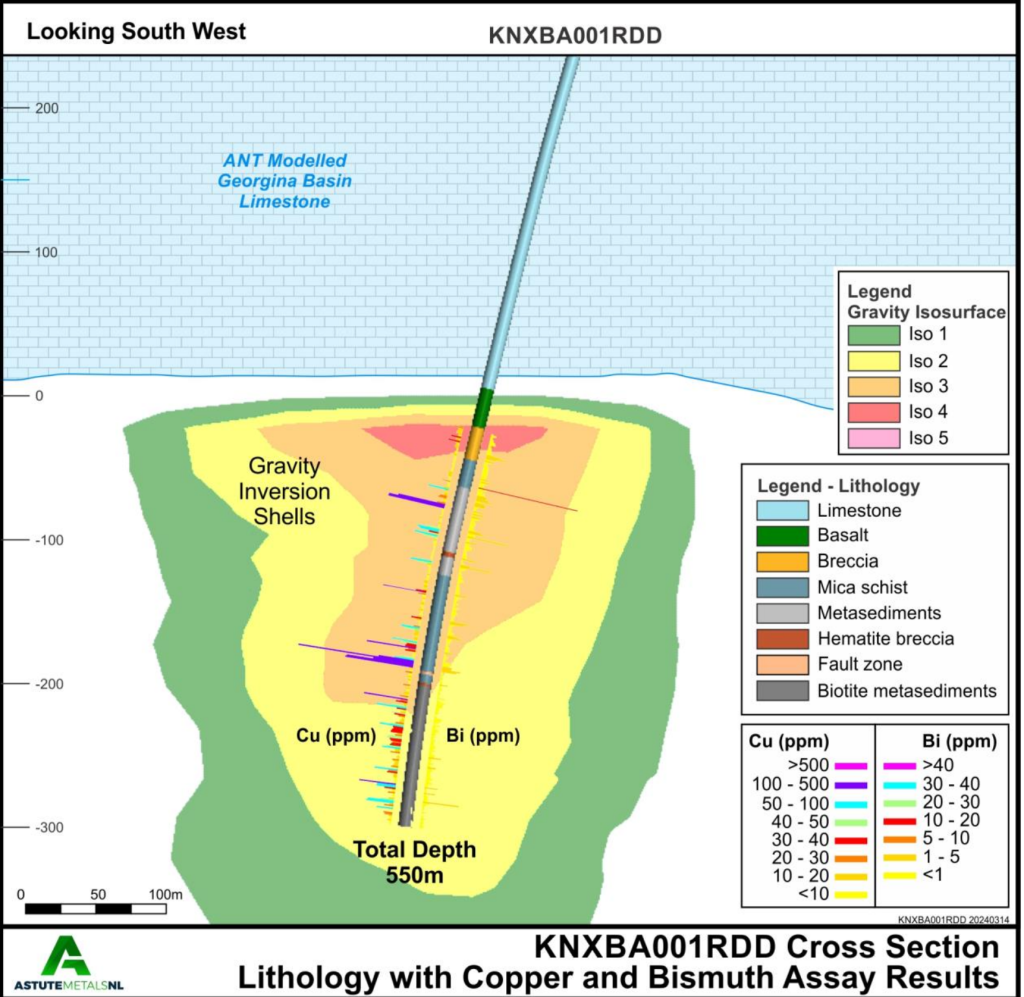
The Banks prospect contains two modelled gravity targets.
The northern target has approximate dimensions of:
- 150 metres by 100 metres
- Approximately 100 metres vertically
The larger southern target has approximate dimensions of:
- 270 metres by 190 metres
- Approximately 100 metres vertically
Both targets have modelled densities of approximately 3.49 grams per cubic centimetre.
A previous drillhole clipped the edge of the northern dense body and intersected IOCG-associated pathfinder elements, including:
- 3 metres at 167 ppm copper, 1.02 ppm bismuth and 0.22 g/t silver from 325 metres
- 4 metres at 226 ppm copper, 1.55 ppm bismuth and 0.43 g/t silver from 436 metres
The larger southern target remains untested.
Western Tenements
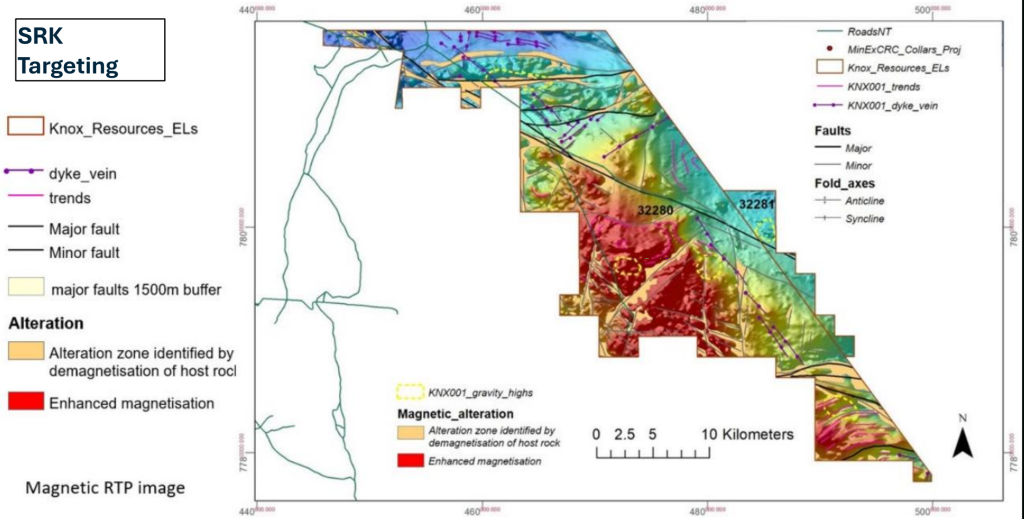
The western tenure includes ELA32280 and EL32281.
ELA32280 remains under application and is progressing through the relevant agreement process with Traditional Owners.
The western tenements contain a high-intensity target identified through Geoscience Australia’s North Australian Craton IOCG mineral potential mapping.
Key geological characteristics include:
- A large demagnetised zone
- Interpreted regional structures
- Associated gravity anomalism
- Multiple Tennant Creek-style ironstone targets identified by SRK Consulting
- East-west structural trends
- Evidence of magnetite-destructive alteration
These features are considered prospective for structurally controlled, ironstone-hosted copper-gold mineralisation.
Ranken Tenements
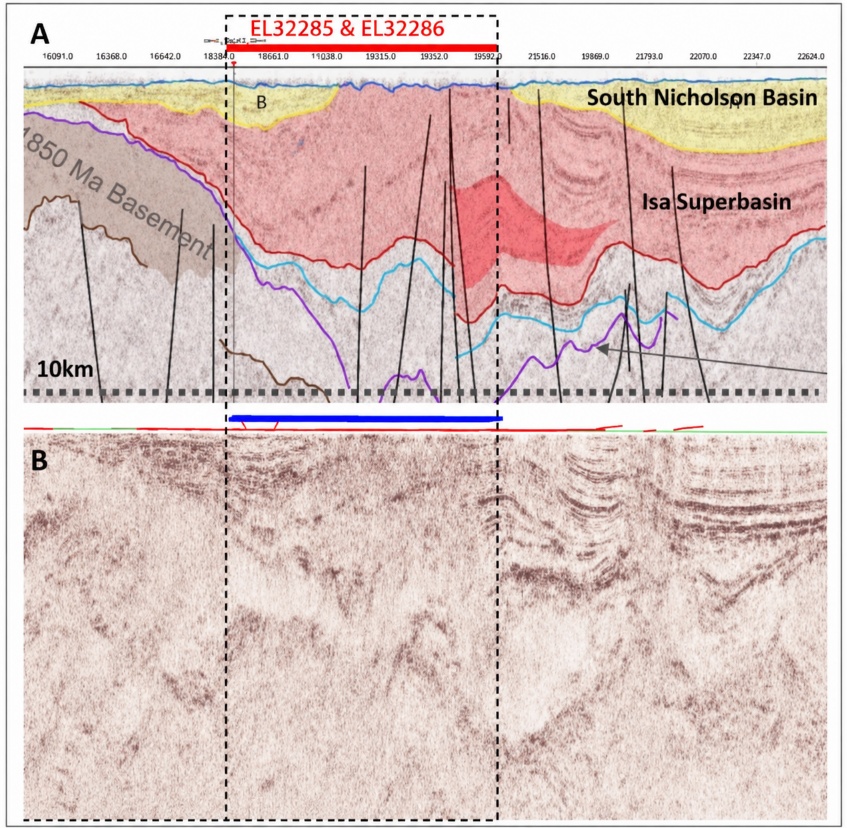
The Ranken tenements comprise EL32285 and EL32286.
These tenements contain shallow expressions of the McNamara Group, which is part of the broader geological sequence hosting major sediment-hosted lead-zinc-copper deposits in the Mount Isa region.
The Ranken area is considered prospective for sediment-hosted base metal mineralisation and provides Alien Metals with exposure to an additional exploration opportunity within the wider Georgina Basin portfolio.
Proposed Work Program
Subject to the availability of sufficient funding and required approvals, Alien Metals’ proposed work program over the following 12 months includes:
- Two exploration drillholes at the central tenement prospects
- Additional airborne magnetic and gravity surveying
- Further geophysical modelling and target generation
- Refinement of existing drill-ready targets
- Follow-up of previous copper and uranium anomalism
- An on-country meeting with the Central Land Council to advance exploration licence applications over Aboriginal freehold land
The existing exploration dataset provides Alien Metals with the opportunity to move efficiently into targeted fieldwork and drilling.
Strategic Rationale
The Project adds a large-scale copper-gold and uranium exploration opportunity in a region where investor interest is being reinforced by major corporate activity.
The Georgina Basin Project provides:
- A substantial landholding in an emerging mineral province
- Exposure to copper, gold and uranium
- More than A$4.8 million of inherited exploration investment
- Multiple advanced targets supported by modern geophysical modelling
- Previous drilling evidence of copper, uranium, silver, bismuth and ironstone alteration
- More than 90 regional IOCG targets
- A defined pathway toward systematic drill testing
- Clear regional read-through from the Pan African–Emmerson transaction, which demonstrates market interest in Tennant Creek copper-gold assets
- Opportunities to apply Alien Metals’ project-generation and partnership strategy
Alien Metals intends to build on the significant exploration work already completed and advance the Project through systematic geophysical interpretation, target refinement and drill testing.